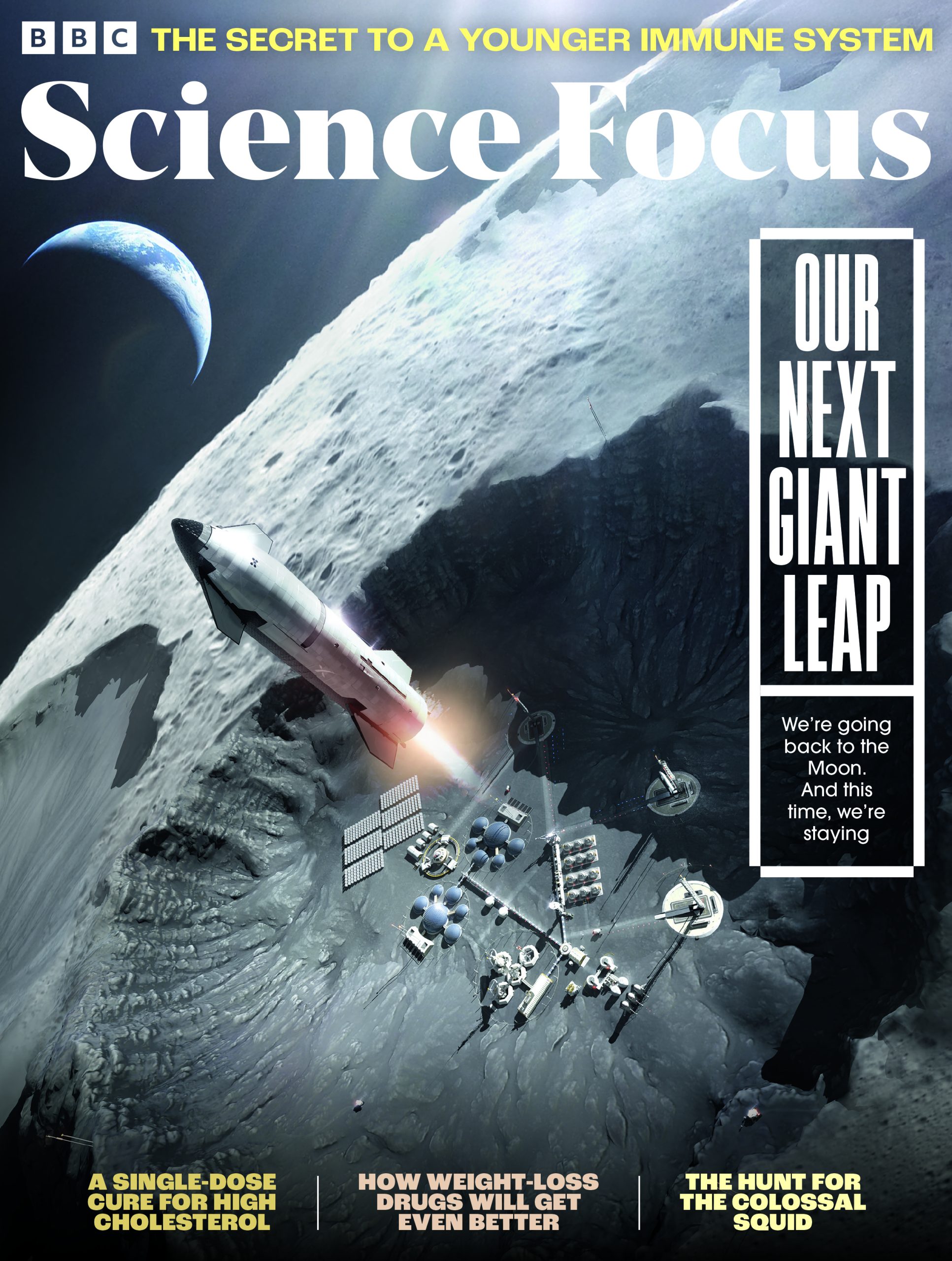
New issue: Our Next Giant Leap

We’re going back to the Moon, and this time we’re staying. That was roughly the message from NASA when, in March, it shared its plans to build a Moon base via a series of events and documents intriguingly titled “Ignition”. Meanwhile, Lunar Gateway – the proposed permanent space station orbiting the Moon, intended to support future missions to the Moon, Mars and beyond – has been put on hold. NASA is focusing its attention on other things now, possibly due to the pressure coming from another nation: “We find ourselves with a real geopolitical rival, challenging American leadership in the high ground of space,” said NASA administrator Jared Isaacman earlier this year. If we put aside the worrying perception of space as the ultimate “high ground” for a moment, the message is clear. The US doesn’t want China running around on the Moon and having it all to itself. So, the race to put boots on the lunar surface – boots that might one day be dusted with regolith and stored by the airlock of a little lunar ranch in the shadow of a crater – is on. When will it all happen? Well, NASA is targeting a human landing in 2028, and a habitat – one that astronauts can spend the night in, if not stay permanently – could be ready by2032. China, on the other hand, is proposing to have its taikonauts arrive on the Moon in 2030 and has set 2035 as a deadline for some kind of semi-permanent structure there. So, in what feels like the blink of an eye, the idea of a Moon base has come to life. It’s gone from being a leap of imagination that lived exclusively on the pages of science-fiction novels to becoming the actual, next giant leap for humanity. Discover how these lunar outposts will take shape – and why China and the US are racing to establish them – in this issue.


The cover of issue 435 of BBC Science Focus magazine

Ghosts of the Deep

There are no recorded sightings of live adult colossal squid in the wild. A group of intrepid experts is setting out to change that.

The next-generation of weight-loss drugs

GLP-1 drugs help you lose weight by suppressing your appetite. Their successors take an entirely different approach.

The Moon base race

The race to establish an outpost on our nearest celestial neighbour is heating up. And the stakes couldn’t be higher.

The nocebo effect

The placebo effect has an evil twin and it can play havoc with your health.

Plus

  • A single-dose cholesterol treatment? Scientists are seeing promising results in a landmark clinical trial.
  • Build your own sim-racing rig: If you want to graduate from a controller to something that makes you feel like a sim racer, you’ll need around £700 (that's not including a console or a PC) for a wheel & pedals, seat and monitor. We showcase a fantastic setup that will get you feeling like a pro racer.
  • Q&A: Your questions answered. This month, our experts answer: Did plants have a Black Death too? Is it safe to drink from a plastic bottle that’s been left in a hot car? Is burnt toast bad for you? What really made Saturn’s rings? What is the future of cheese? Why do some people naturally attract cats? Do sharks have friends? Is confidence contagious? And more…

Issue 435 on sale Tuesday 21 July 2026

Subscribe to BBC Science Focus Magazine

Don’t forget that BBC Science Focus is also available on all major digital platforms. We have versions for AndroidKindle Fire and Kindle e-reader, as well as an iOS app for the iPad and iPhone.

This website is owned and published by Our Media Ltd. www.ourmedia.co.uk
© Our Media 2026