How do authorities prevent nuclear materials fromfalling into the wrong hands?
In the back garden of a grey detached house in Lauenförde, in north west Germany, a plastic bag lies buried in the soil. Inside the bag is a steel box that contains 14 pieces of black material that are each roughly the size and shape of a bullet. These tiny black pellets don’t look like something you’d use to keep the slugs away from the begonias – and they’re not. In fact, they’re uranium pellets, the kind of thing that would usually be stored safe inside a nuclear reactor. The presence of radioactive material among the weeds is obviously cause for concern, giving the authorities a string of questions to answer – not least of which being where did it come from and how did it end up in someone’s back yard?
To find out a little more about their discovery, the German authorities sent the pellets to the Institute for Transuranium Elements (ITU), the EU’s nuclear research centre in Karlsruhe, in south west Germany. Here, physicists have built up expertise in tracking nuclear material back to its source – a key starting point of any investigation. These nuclear detectives can analyse a radioactive nastie to find out its unique properties, its ‘signature’, which could allow them to pinpoint where and when the stuff was made. So they took the bag and set to work – studying the pellets’ and measuring how much the uranium had been enriched.
“If the plutonium came from a heavy-water reactor, we could narrow the search, as these are only found in Canada and Romania”
“When we fed our database with the pellets’ dimensions and the enrichment, it gave us two possible hits,” says Dr Maria Wallenius, a nuclear forensics expert at ITU. “The only difference between the two possible manufacturers was the width of the pellet’s chamfer [a ridge around one of the ends of the tiny cylinder]. The difference between the two was only 0.2mm, so it wasn’t very big, but it was decisive.” Within five days, the scientists could confirm that the uranium had come from a nuclear fuel production plant elsewhere in Germany, which closed in 1994.
Thankfully the buried pellets didn’t pose a threat to even their current owner’s nearest neighbours. The uranium was only slightly enriched, emitting radioactive particles that couldn’t even penetrate human skin. And the man whose garden it was buried in, known only by his first name of Hermann, wasn’t a criminal mastermind with a dastardly plan marked out for his stash – in fact he contacted the authorities to tell them it was there. Rumours of how the uranium ended up in his back garden are widespread, but there has been no official confirmation. Since the find in February 2007, the local attorney-general has decided not to prosecute because the stash didn’t pose any real danger.
Terrorist threat
But there’s a genuine concern among governments around the world that nuclear material is falling into the wrong hands and could end up with someone who does have a plan for it. The thought that terrorists could buy uranium or plutonium on the black market and turn it into a ‘dirty bomb’ by strapping an explosive device to it – or even buy a nuclear weapon itself – is considered a real danger. Thomas Kean, who chaired the 9/11 Commission in the US, is quoted as saying that a nuclear weapon getting into the hands of a terrorist is “the single greatest threat” facing the nation. It’s a threat that’s being taken seriously – earlier this year, 12 police agencies in New York State were handed $1.4 million (£700,000) to spend on radiation detectors for officers who will act as an early warning system for a dirty bomb.
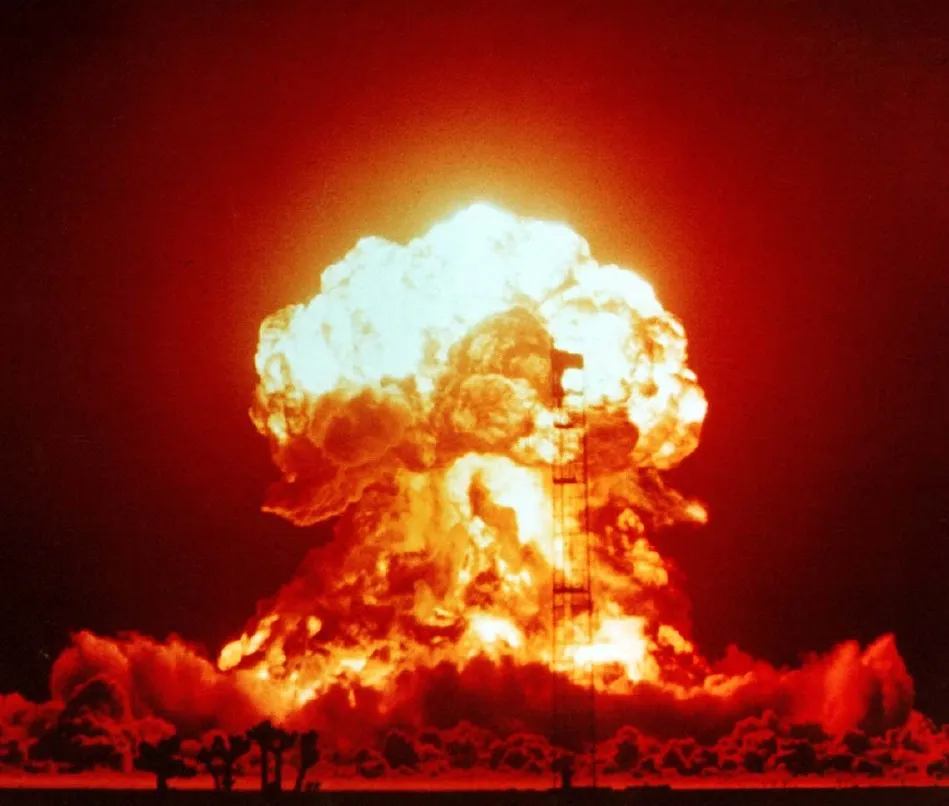
It’s against this background that nuclear detectives around the world are honing their skills – it will be down to them to trace the source of nuclear contraband when it’s found and even, in the worst case scenario, track down the culprits in the event of a successful nuclear attack.
One of the world’s leading authorities in nuclear forensics is Dr Jay Davis, a senior figure in the US Government’s Department of Defense until 2001, who spent time as a weapons inspector in Iraq after the first Gulf War. While pragmatic about the likelihood of a nuclear 9/11, he says there’s a real need for skilled nuclear forensics experts. “One of my mentors said if this kind of thing happens anywhere in the world, you’re going to get a call from the White House. And they’re going to say, ‘what can you tell me in two hours, what can you tell me in four hours and what can you tell me in eight’. And if your answer is ‘gosh, that’s an interesting problem, I’ve never thought about that before’, all you bright young men and women are going to be out of work the next day.”
Getting information to the decision-makers quickly could be crucial. In the hours immediately after a nuclear attack, governments would be under massive public pressure to determine whether a further strike could be on its way and, if necessary, hit back.
The first nuclear forensics experts on the scene would carry with them a vital piece of equipment – a gamma-ray spectrometer. About the size of a suitcase, the radiation these devices detect can give a quick indication of the type of radioactive material – whether it’s uranium or plutonium for instance – and an early indication of its all-important signature. A secondary, more detailed analysis would take place at the lab.
“Being able to do this work accurately and at speed is crucial,” explains Davis. “Many of the tools we’re using aren’t new – they were developed during the Cold War to help us understand what Russian or Chinese weapons were like, but they weren’t used against the clock. The president wasn’t calling at the end of the day to ask where the report was.”
The path the investigation will take depends on the nature of the attack. The attack involving radioactive material that most people in Britain will be familiar with was on one person – Alexander Litvinenko. A former Russian spy, Litvinenko died after ingesting polonium-210 – a material that emits alpha radiation, a form of radiation that can’t pass through paper or skin but, if it’s taken into the body, can destroy cells – something it did ruthlessly to Litvinenko. Polonium is produced in a reactor from another element, bismuth. In this case, tracking down the source of the material was a relatively simple task. “There are only a few reactors in the world that can make polonium, and we know where they are,” says Dr Patrick Regan, a nuclear physicist at the University of Surrey. “And you also need an industrial complex to separate the polonium from the bismuth.” The Atomic Weapons Establishment at Aldermaston, the centre of nuclear forensics expertise in the UK, reportedly traced the polonium to a generator in Russia. The work of the authorities was made easier by the fact that the polonium 210 left a trail of radioactive ‘fingerprints’ across London – fingerprints that followed the movements of Litvinenko and, apparently, another man – former KGB officer Andrei Lugovoi. A request to extradite Lugovoi, who denies the accusation that he poisoned Litvinenko, has been rejected by the Russian government.
But radioactive material doesn’t always leave a trail of breadcrumbs. Often traditional forensic techniques have to come into play. “The material itself may not contain information on the trafficking route, but what it was packaged in may have picked up something like pollen, which might provide hints,” says Dr Mayer, a colleague of Dr Wallenius at ITU in Germany. “If you want to establish who has handled the material, you look for the classical evidence like fingerprints or traces of DNA. We’re looking at adapting classical techniques to nuclear materials because you still need to come up with results that would stand up in court.”
Secrets and safety
Even pinpointing the source of the material isn’t easy. It relies on having technical information about all the potential sources – and that isn’t always readily available. The exact design and make-up of a nuclear weapon is highly classified information, so tracing an intercepted or, in the worst case, detonated bomb could prove to be nigh on impossible. But these details can be released as part of agreements between countries. “We used to laugh 20 years ago in treaty negotiations that we had a class of data that said ‘top secret, releasable only to the Soviets’,” says Davis. “I’m seven years out of government now, so I don’t know how this dialogue is going today.”
The techniques were used to find out what the heck the Soviets and the Chinese were doing
Dr Jay Davies Former member of the US Defense Department
Many of the basic techniques used by nuclear detectives are nothing new – it’s just that the nature of the nuclear threat has changed significantly. “The techniques were used to find out what the heck the Soviets were doing and, later, what the heck the Chinese were doing,” says Davis. “It’s very hard to imagine any sane nation firing one nuclear weapon at the United States, or Britain for that matter. But it’s not inconceivable to imagine a group of 50 people who have got their hands on a nuclear weapon trying to smuggle it into the country.”
So is there a real risk of a nuclear 9/11? Dr Davis doesn’t think so, but it doesn’t make the need for nuclear forensics any less important – in fact he was one of several senior figures in the US who earlier this year called for an international push to improve the science of nuclear forensics. “It’s a jargon I don’t like because it sounds like Donald Rumsfeld, but this is an area where I tend to be capability driven, rather than threat driven. It’s like investing against a tornado or a reactor accident – it’s a rare but high-consequence event. Were one of these things to happen, you must absolutely know what you can do."
Tracing the source
How to track down the origin of nuclear materials
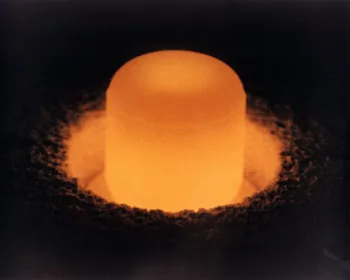
The key job of any nuclear detective is to examine the radioactive material’s ‘signature’ characteristics. Different nuclear reactors and processing techniques produce materials with different signatures, so it may be possible to trace them to their source. Knowing where the material came from helps the authorities to decide where security needs tightening or, in the event of an attack, where to point their weapons.
A nuclear forensics expert will study the physical characteristics of the item they’ve found – examining its texture, size and shape. Even these simple things can be valuable as the dimensions of a nuclear pellet are often unique to a manufacturer.
But vital clues will be missed unless the nuclear detective finds out exactly what radioactive material they’re dealing with – whether it’s uranium or plutonium for instance. These substances can also appear in different forms, or isotopes. Natural uranium, for instance, is made up of uranium 238 and u235. Enrichment involves increasing the proportion of u235 – the isotope that releases lots of energy and is ideal for bombs and reactors. The level of enrichment can also pinpoint where the stuff was made and its intended use. Different isotopes give off different radiation and this can be measured using a gamma- or alpha-ray spectrometer.
If plutonium is found, the process is the same. “Depending on the type of reactor that generated it, the plutonium composition looks different,” says Dr Klaus Mayer of ITU. “If, for instance, the plutonium composition shows it came from a heavy-water reactor, we could slightly narrow the search as these are only found in Canada and Romania.”
Under nuclear attack
In the Financial District of New York, a police officer carrying a mobile phone-sized radiation detector approaches an abandoned suitcase. As he gets nearer it springs into life, sounding an alarm. One hour later, this is the scene on Wall Street...
- All staff in close proximity to the dirty bomb wear nuclear protective suits as a precaution.
- A nuclear forensics specialist uses a gamma-ray spectrometer to find out the nature of the nuclear material, and the level to which it has been enriched. This initial test will determine which specialist laboratory the evidence will be sent to for more detailed analysis.
- A secure van is waiting to take the suitcase to the Los Alamos National Laboratory in New Mexico where more detailed nuclear forensics as well as ‘classical’ forensic techniques will be used.
- The police officer who first spotted the suitcase its still at the scene clutching his radiation detector – a device he was given this year.
- The site has been cordoned off and is being guarded by police officers, although the FBI is in overall control.
- A remote-controlled robot, operated by an ordnance specialist, rolls away from the suitcase having just defused the explosive device. Only now can the nuclear detectives approach.
- A nuclear detective is measuring radioactivity levels in the area around the suitcase. The location of each reading is pinpointed using a GPS device, helping to build a ‘map’ of the radiation.
Follow Science Focus onTwitter,Facebook, Instagramand Flipboard

