World's most extreme science labs

Extreme labsHighest

  • A research centre might be the last thing you expect to see when climbing the Nepalese Himalayas, but that’s precisely where the Pyramid Laboratory can be found.
  • Perched 5050m above sea level, it is the flagship for high altitude research and has hosted over 550 research missions since opening in 1990.
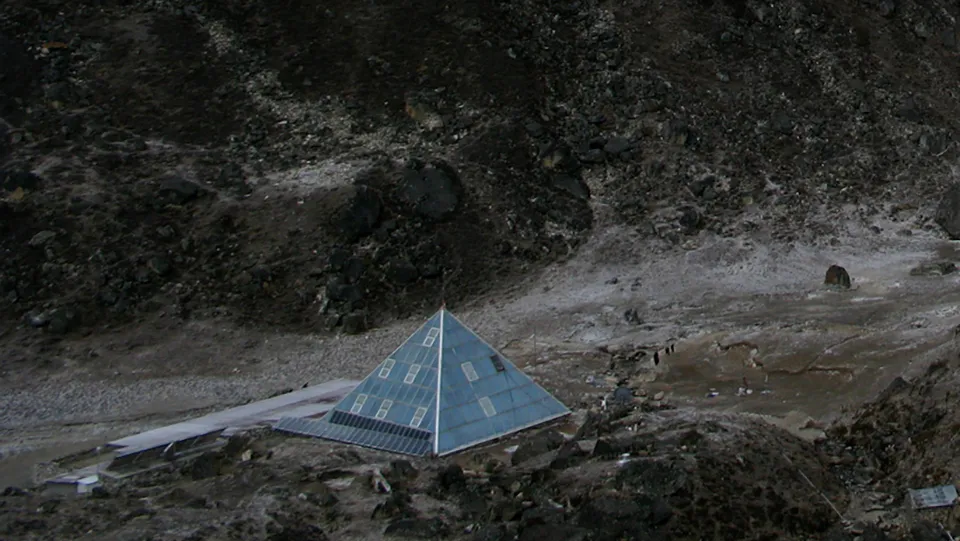
  • Owned by the Ev-K2-CNR Committee, which promotes research in mountain areas, the centre aims to use its knowledge to ensure a better quality of life for native populations around the world and safeguard fragile, high altitude ecosystems.

Windiest

  • Creating speed at Mach 30 – that’s about 30 times the speed of sound – the LENS-X wind tunnel at the Calspan University of Buffalo Research Centre, New York, packs a punch when it comes to airflow.
  • At 2.5m wide and over 30m long, it only ‘blows’ for two milliseconds at its most powerful, generating 18 metres of airflow. The facility, which can test missiles and scaled-down aircraft, has even been used to run tests for NASA’s Orion spacecraft.

Extreme underwater labMost pressurised

  • The Aquarius in Key Largo, Florida is a dedicated underwater research laboratory able to house six researchers for up to two weeks.
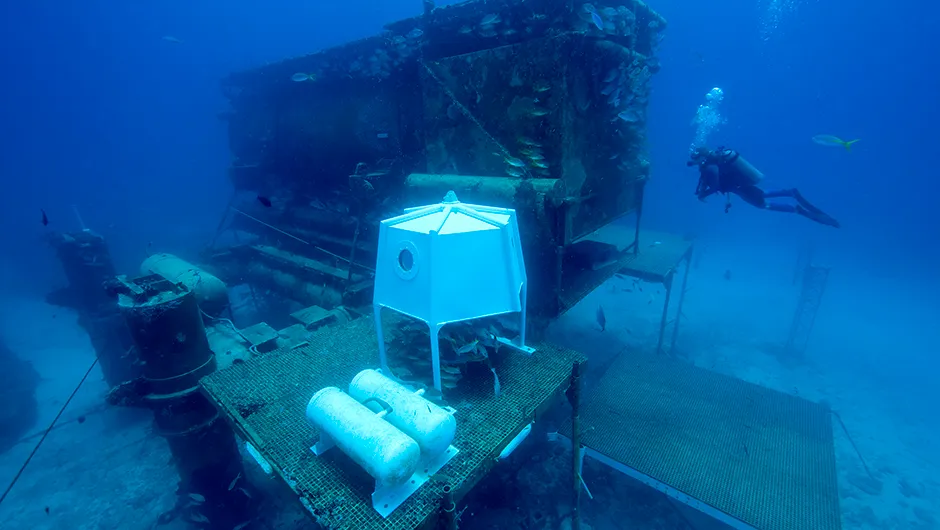
  • Though based at a depth of 20 metres, the working platform at 14m is subject to around 2.5 times the pressure at the surface. And you can forget the measly couple of hours diving time you’d usually get if starting from the sea surface – Aquarius residents can dive for up to nine hours at 30m.

Extreme labs underground

Deepest

  • Buried some 2km below Ontario, Canada, SNOLAB is best known for the now-ended Sudbury Neutrino Observatory (SNO) experiment.
  • Scientists could use the thick layer of rock above to their advantage, filtering out cosmic radiation to detect and observe weakly-interacting particles called neutrinos.
  • The lab is now being refurbished for the SNO+ experiment, which will use a liquid-based process to study neutrinos of even lower energy levels than SNO.

Most patient

  • Watching paint dry would be a fun day out compared to what goes on at the Pitch Drop Experiment at the University of Queensland, Australia.
  • The aim of the experiment is to prove that pitch – the dark, sticky stuff obtained from distilling tar – is an extremely viscous liquid, by letting it drip from a glass funnel. Started in 1927, only eight drops have fallen, most recently in 2000, though nobody has ever witnessed it happen.
  • Analysis shows that the viscosity of pitch is 230 billion times that of water, and there’s enough of the stuff to last about another hundred years.

Extreme labs beautifulMost attractive

  • The National High Magnetic Field Laboratory, Florida, is home to dozens of magnets and houses the world’s strongest.
  • The 45 Tesla (45T) Hybrid is the equivalent strength of about 45,000 fridge magnets, and is made up of a superconducting magnet at 11.5T and a resistive magnet at 33.5T.
  • It’s much in demand among scientists worldwide as a testing station, and boasts some impressive stats: the record-holder is 6.7m tall, costs $14.4 million, and has to be operated at -271°C.


Images courtesy of SNOLAB, Orfield Laboratories Inc, nasa, noaa

Find out more

Issue: 
Extreme worlds
Comments: 1

Seriously brilliant subject,

Mon, 2010-06-14 22:48
M Paul Lloyd

Seriously brilliant subject, more please. How about an article on the reserach station on South Georgia, and dispell a few 'rumours' in the process?